
At a Glance:
Greenhouse and allotment growing each offer distinct advantages depending on a grower’s priorities. Greenhouses provide control, convenience and protection from unpredictable UK weather, while allotments offer greater space, crop variety and community benefits. The preferred option ultimately depends on available time and budget, and on whether the focus is on efficiency or scale.
How Are You Planning To Grow Your Produce This Season?
For growers, choosing between greenhouse growing and allotment growing is not always straightforward. Both methods offer clear benefits and can produce excellent results depending on your space, time and growing goals. For some gardeners, a greenhouse offers convenience and control. For others, an allotment provides the scale and freedom needed to grow a wider range of crops. If you are weighing up the two, it helps to understand how each suits the local climate and the practical realities of day-to-day gardening.
For growers looking to make protected growing even easier, systems such as polytunnel automatic irrigation can help reduce manual watering and improve consistency, especially during warmer months. Still, whether a greenhouse or an allotment is preferred usually depends on what you want from the growing experience.
Why Growers Compare Greenhouses and Allotments
In the UK, gardening conditions can be unpredictable. A week of warm spring weather can suddenly turn into heavy rain, strong winds or a late frost. Because of this, many growers think carefully about where and how they want to grow their produce.
A greenhouse provides a more controlled environment, while an allotment offers more growing space and natural conditions. The right option often comes down to how much time you have, how much produce you want to grow and whether you prefer convenience or scale.
The Benefits of Greenhouse Growing
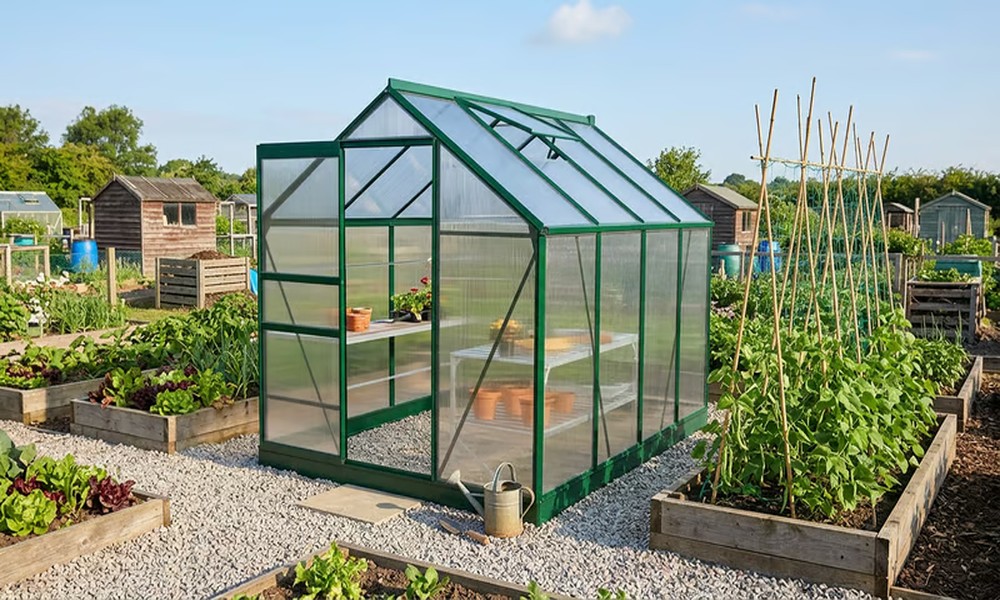
Greenhouse growing is often preferred by local gardeners who want more control over conditions. With a greenhouse, you can protect crops from heavy rain, wind and colder temperatures, which is particularly useful in an unreliable climate.
It is also ideal for extending the growing season. Seeds can be started earlier in the year, and crops can continue later into autumn than they would outside. This makes greenhouses especially useful for tender crops such as tomatoes, cucumbers, peppers and chillies, which often perform better under cover.
Another major advantage is convenience, as plants are easier to monitor, water and harvest. For busy growers, this can make a big difference. Problems such as pests, disease or drying compost are often spotted sooner when the growing space is smaller and more controlled.
The Downsides of Greenhouse Growing
Despite the advantages, greenhouse growing is not perfect. One of the biggest challenges is temperature control. On sunny days, a greenhouse can become extremely hot, so ventilation is essential. Watering also needs to be consistent, particularly in summer when containers and grow bags dry out quickly.
Cost is another consideration. Buying and installing a greenhouse can require a higher upfront investment than simply taking on an allotment plot. There may also be ongoing costs for compost, staging, repairs and, in some cases, heating.
Space can also be limiting. While a greenhouse is productive, it cannot match the scale of a full allotment. Growers who want to produce large quantities of potatoes, pumpkins or sweetcorn may quickly find a greenhouse too restrictive.
The Benefits of Allotment Growing
Allotment growing is often preferred by people who want space, variety and a more traditional outdoor growing experience. A standard allotment plot usually gives far more room than most home gardens, allowing growers to cultivate a broad range of crops.
This extra space is especially useful for staple vegetables such as potatoes, onions, brassicas, beans and courgettes. It also provides space for fruit bushes, compost bins, and proper crop rotation, all of which can improve long-term productivity and soil health.
For many growers, the social side of allotment growing is another major benefit. Allotment sites often create a strong sense of community, where gardeners share tips, swap plants and learn from one another. Resources like Allotment Online can also be particularly helpful for beginners who are still building confidence.
The Downsides of Allotment Growing
The main drawback of allotment growing is that it often demands more time and travel. If your plot is not close to home, visiting regularly to water, weed and harvest can become difficult, especially in the summer months.
Allotments are also more exposed to the elements. Heavy rain, cold snaps and strong winds can all take their toll on crops. In addition, outdoor plots may attract more pests such as pigeons, foxes, rabbits and slugs. Security can sometimes be a concern, too, depending on the site.
Maintenance is another factor. As allotments are larger, they can become overwhelming if not managed consistently. Weeds, overgrown paths and neglected beds can quickly turn a productive space into hard work.
Greenhouse vs Allotment – Which Is Better for UK Weather?
When looking purely at the British climate, a greenhouse often has the advantage. It gives growers a level of protection that can be invaluable in a country where weather conditions change quickly. Delicate crops are better shielded, and sowing or harvesting windows can be extended.
However, allotments still perform extremely well for hardy, reliable outdoor crops. Root vegetables, brassicas, onions and soft fruit often thrive in allotment conditions when given proper care. If your aim is to grow large amounts of food rather than tender Mediterranean-style crops, an allotment may be the better fit.
Final Thoughts
So, greenhouse growing vs allotment growing – what is preferred? For growers, greenhouse growing is often preferred for reliability, convenience and protection from unpredictable weather. Allotment growing, though, remains a favourite for those who want space, community and the satisfaction of cultivating a wider range of crops outdoors.
Ultimately, the best option is the one that suits your available time, budget and gardening ambitions. For some, that will be a greenhouse at home. For others, it will be an allotment plot full of seasonal produce.